
Leonard Mambo Mbotela (29 May 1940 – 7 February 2025)
In the 80s and throughout the 90s before television became a common thing in Kenyan households, radio was king, and in such a kingdom, the man with “The Voice” and maybe “The Juice” is king. As a result of his everyday animated “juice” while in school, the man, Leonard Mbotela got a new name, Mambo, a name that he embraced and that became, complimented by his unique scratchy voice, a part of his signature in a radio/tv career that span close to 6 decades. His Sunday afternoon show on KBC Radio Je, Huu Ni Ungwaana was perhaps as famous as the late Wahome Mutahi’s Whispers column on the Sunday nation. While the former was a critical yet educative way of looking at social life in Kenya, the latter was a satirical and humorous commentary that followed the life of one character, Whispers, Son of The Soil.
Both men, on radio and print were indeed the highlight of Kenyan houses on lazy Sunday afternoons, as it was common for people to purchase the newspaper after leaving Sunday church service.
Leonard who died this February was born to James and Aida Mbotela in Freretown, Mombasa and can trace their roots to his great-grandfather who was aboard an Arab slave ship from Malawi (Nyasaland) probably heading to a slave market in Zanzibar that would have seen them head to a life of slavery elsewhere. The decree to abolish slave trade was passed as their ship was enroute to Mombasa, and the Biritish Navy freed all the slaves, settling them at Freretown.
His father, James, was a school teacher working in various schools before his appointment as Education Officer after which he retired. Upon retirement, he started working as an editor for The Mombasa Times and Sauti ya Pwani newspapers. His mother, Aida was active in the Maendeleo Ya Wanawake, a women-driven group that was as close to a feminist movement at a time when women’s voices were not as amplified as they are today. She was to later visit Sri Lanka under the group, championed by the iconic Phoebe Asiyo. Phoebe (born Sept 12, 1932) is a trailblazer in Kenyan politics and women empowerment forums that saw the rise of the fight for women rights that also culminated into the Fourth World Conference on Women, held in Beijing, China from September 4 to 15, 1995. This was a landmark event in the global struggle for gender equality.
Leonard started his media journey in Nakuru working as trainee reporter for The Standard. While there, he used to send a lot of correspondence to the then Africa Broadcasting Service (ABS) which became the Voice of Kenya (VOK) and later Kenya Broadcasting Corporation (KBC) in 1964. A media field trip in Nakuru brought him into direct contact with some of his favorite broadcasters interviewing listeners for a radio show. They recognized his name and later he was approached to fill in a spot on radio which marked his decades-long career that made him one of the most famous voices on air.
The genesis of Je, Huu Ni Ungwaana
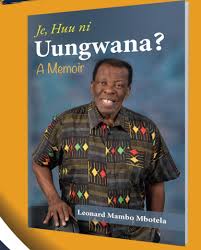
While on an easy Saturday outing after work sometime in 1966, Leonard and his pals went to the Pan-Africa Hotel. At the time it was a place frequented by the upper-class. As they sat down, one of his friends started banging the table and calling the waiters, something that was met with contempt by the upper-class clientele. The late Sir Charles Njonjo was present, and he recognized Leonard who was apologetic on behalf of his friend, asking him a little later after the apology, Je, Huu Ni Ungwaana, while reminding that this was a place of decorum, not the usual joints they commonly visited. As soon as he went back to work, the idea to have a show by the same title developed.
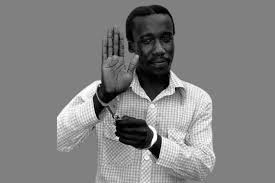
For much of his life, Leonard Mambo Mbotela’s experience during the 1982 coup attempt in Kenya became a defining moment in his career and legacy. On the early morning of August 1, 1982, mutinous Kenya Air Force soldiers led by Hezekiah Ochuka and Pancras Oteyo Okumu stormed into the Voice of Kenya (VOK) studios in Nairobi to announce their takeover of the government. Recognizing Mbotela’s trusted voice as a household name across Kenya, they abducted him from his residence in Ngara and forced him at gunpoint to broadcast their message.
The Coup Announcement
Mbotela, still in his pajamas, was driven to the VOK studios along Harry Thuku Road. There, he was ordered to declare on air that President Daniel arap Moi’s government had been overthrown and that Hezekiah Ochuka, chairman of the so-called Revolutionary Command Council, was now the president. His voice, familiar and credible to millions of Kenyans, became the medium through which the coup plotters sought to legitimize their actions.
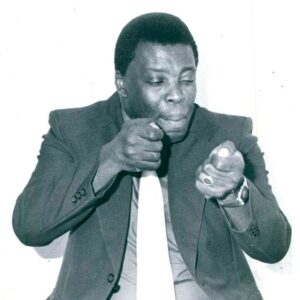
Listeners tuning in that Sunday morning were stunned to hear Mbotela’s announcement:
“I am Leonard Mambo Mbotela, and I am here with Hezekiah Ochuka. The government of President Moi has been overthrown. Police officers are now ordinary citizens. All prisoners have been released. Please stay at home and do not loiter in the streets.”
Between announcements, Mbotela was forced to hide under a table as chaos unfolded outside the studio. The coup plotters demanded martial music be played during broadcasts, but only one record—Tabu Ley’s Maze—was available in the studio. This song became an eerie soundtrack to one of Kenya’s darkest days.
“I had two options,” he was to say later in an interview, “to announce that Moi had been deposed, or to be shot. I obeyed the rebel’s orders.”
The Rescue
By mid-morning, loyalist forces led by Major General Mohamoud Mohamed stormed Broadcasting House to regain control. The coup plotters fled upon realizing they were under attack, leaving Mbotela alone in the studio. When soldiers entered, guns drawn, they found him hiding under a table. Raising his hands in surrender, he identified himself and explained that he had been forced to make the announcements at gunpoint.
Mbotela later recalled how General Mohamed recognized him and asked: “Wewe Leonard, ni mambo gani hiyo unatangaza leo asubuhi?” (“Leonard, what is this you’ve been announcing this morning?”)
Shortly after order was restored, Mbotela returned to the airwaves—this time under loyalist forces—to reassure the nation: “This is the Voice of Kenya, Nairobi. I am Leonard Mambo Mbotela, and I am here with General Mahmoud and other officers from Lang’ata and Kahawa Barracks. I would like to assure you that the Government of President Daniel arap Moi is firmly in control.”
Aftermath
The events of August 1 forever altered Mbotela’s life. For months after the failed coup attempt, he faced harassment from Special Branch agents and State House operatives who suspected he may have been complicit in the plot. Despite his insistence that he was a victim of abduction, these suspicions persisted until 1984 when Lee Njiru, Moi’s communications advisor, invited him to join the Presidential Press Service (PPS).
It was during his time with PPS that Mbotela learned his father had once taught Moi at Tambach School—a connection that perhaps helped rebuild trust between him and the president. (this particular bit of info sourced here)
Illness and death
Mbotela had been in and out of hospital severally before his death. In 2020, he had been hospitalized at Nairobi South Hospital for two weeks when he asked Kenyans and other well-wishers for help offsetting the hospital bill. Then President Uhuru Kenyatta came to his aid and paid Kshs 1.1 million.
Mbotela died on 7 February 2025, at the age of 84. He had been receiving treatment at Nairobi West Hospital in Nairobi, having been admitted two weeks earlier. He leaves behind his wife, Alice Mwikali and three children: Ida Mbotela, Jimmy Mbotela and George Mbotela.